


The World’s Theater
Presented in the Eisentrager-Howard Gallery at the University of Nebraska-Lincoln (Dec. 12-16, 2022)
This capstone project was the culmination of a semester’s worth of research, planning and work. Resource waste is an important topic to be having conversations about. The leading creators of waste are large-scale industrial manufacturing, the textile industry, and the electronics sector, but that doesn’t mean we are powerless in making change. Corporations rarely make policies for a cleaner footprint without public pressure and monetary incentive. That public pressure can start by making changes in how we go about our lives. If we stop buying as much fast fashion, change how we buy and dispose of food, and cut down on single-use plastics, the lower sales will pressure companies to listen to what their consumers are asking of them.
GOAL
Persuade viewers to start making less textile, food, and plastic waste in their lives.
IMPLEMENTATION
Many of us live our lives like we’re the audience at the movie theater. We show up to watch a film, maybe we laugh at a comedy, cry for the heartbreak, or scream at the jump scares. Then we go home and keep living life, slowly forgetting what the movie was about, because it doesn’t really matter if you forget, it has no consequence. But if the world is a theater, we aren’t the audience, we’re the cast. And if we want the sequel to be full of beauty and wonder, then we need to be active participants in making the change necessary for that.
So, welcome to the World’s Theater. Peruse the move posters on your way to the ticket booth and grab free tickets to the shows on your way in. At the World’s Theater, we need more from our audience than just reactions. We need participation. Don’t worry about being too early or too late to the show either, the best time is always now.
EVALUATION
86% of the tickets provided were taken by the audience.
Design/Photos/Text/Woodwork: Emily Pietrzak
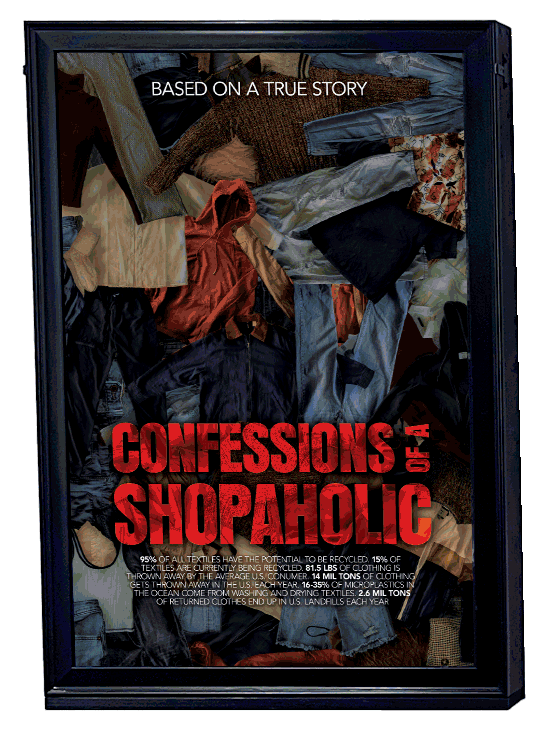
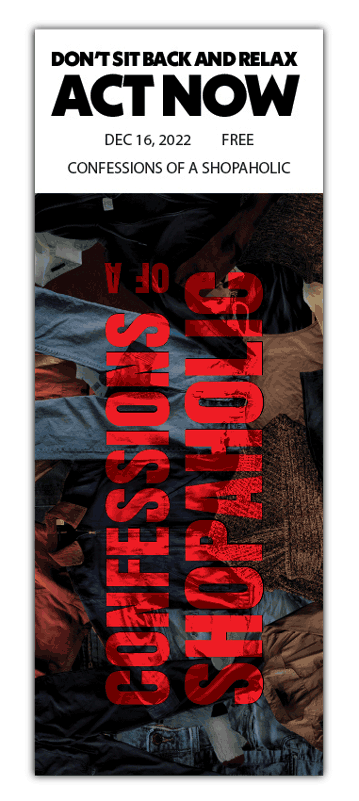
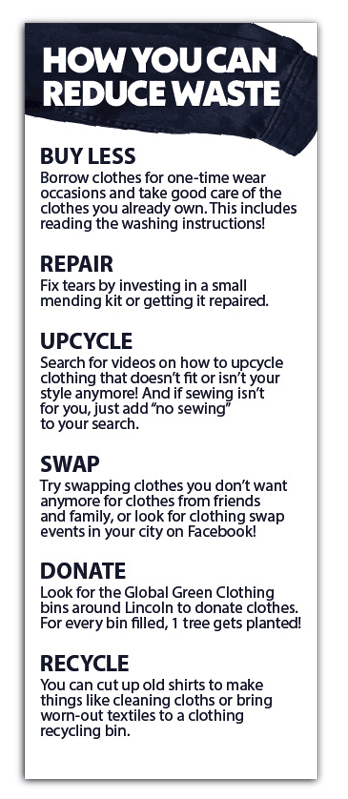
CONFESSIONS OF A SHOPAHOLIC
BASED ON A TRUE STORY
95% of all textiles have the potential to be recycled. 15% of textiles are currently being recycled. 81.5 lbs of clothing is thrown away by the average U.S. consumer. 14 mil tons of clothing gets thrown away in the U.S. each year. 16-35% of microplastics in the ocean come from washing and drying textiles. 2.6 mil tons of returned clothes end up in U.S. landfills each year.
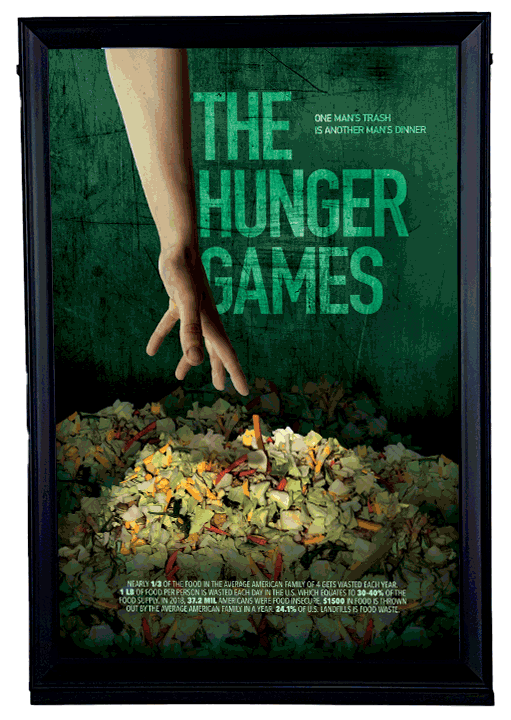


THE HUNGER GAMES
ONE MAN’S TRASH IS ANOTHER MAN’S DINNER
Nearly 1/3 of the food in the average American family of 4 gets wasted each year. 1 lb of food per person is wasted each day in the U.S. Which equates to 30-40% of the food supply. In 2018, 37.2 mil Americans were food insecure. $1500 in food is thrown out by the average American family in a year. 24.1% of U.S. landfills is food waste.
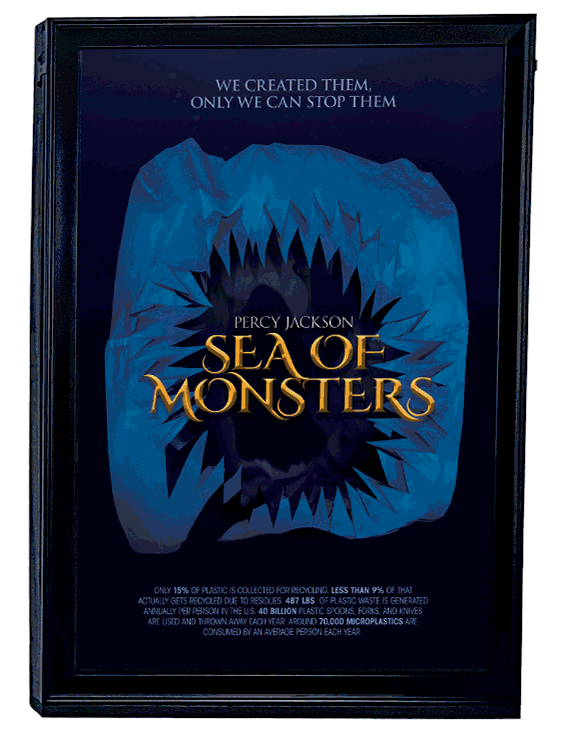

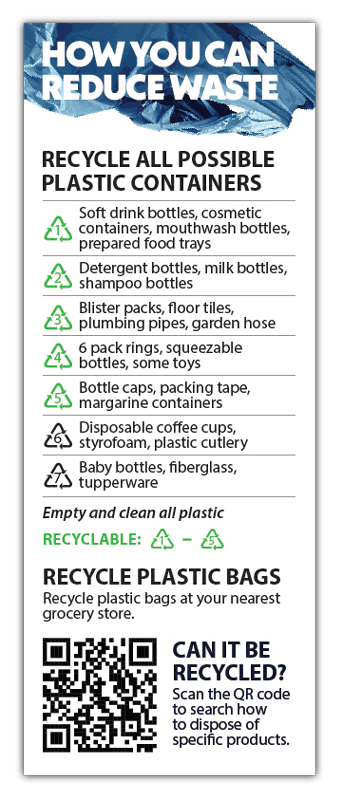
PERCY JACKSON: SEA OF MONSTERS
WE CREATED THEM, ONLY WE CAN STOP THEM.
Only 15% of plastic is collected for recycling. Less than 9% of that actually gets recycled due to residues. 487 lbs of plastic waste is generated annually per person in the U.S. 40 billion plastic spoons, forks, and knives are used and thrown away each year. Around 70,000 microplastics are consumed by an average person each year.